
Steady Foo
Are You Hep to the Jive?
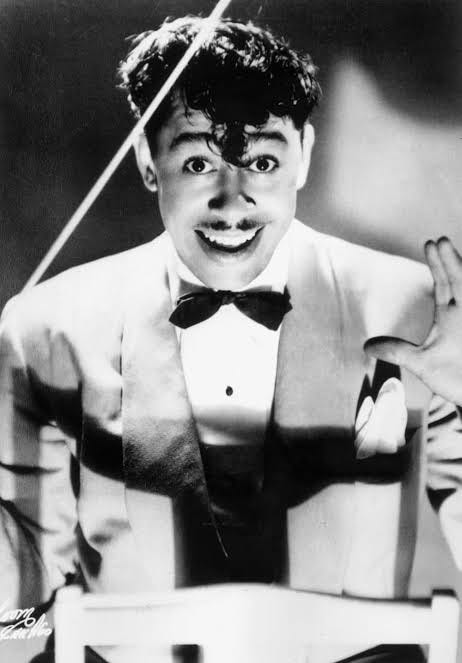
The final phase of my four-year methadone detox was a sleepless month of descent and rebirth. Thawing out after a twenty year freeze I wandered the 5AM streets, wrote simple rhyming poetry and listened to Blood On the Tracks on repeat, my heart pierced then healed by lines like, “If she’s passing by this way I’m not that hard to find/Tell her she can look me up if she’s got the time.” It wasn’t the words that saved me, it was the delivery and it had always been. At the age of twelve Bob Dylan showed me who I wanted to be and I learned how to write listening to him sing (that open hearted snarl). An orphan, but with authority, there was no doubt in my mind that he had come to tell the tale. But as much as I love (was raised by) Bob, and know I’ll be listening to him on my deathbed, I hold Cab Calloway in the same regard, and dare I say, consider him an even more culturally influential figure. That’s right, Cabell Calloway the Third!
How’d you like to blow your top
Dig yourself some fine re-bop
Hi-de-hi, he-de-he
Oh, the hi-de-ho man that’s me
If you think that’s four lines of nonsense, you’re wrong, it’s modernist poetry. You can slouch toward Bethlehem all you want, I’m gonna jitterbug down 125th street and not look back. The verse above is from The Hi De Ho Man and it comes after a triptych of opening wails that sound like a cross between a Muslim call to prayer and a Jewish cantor on peyote channeling Louis Armstrong. Three biblical cries that resolve in hipster jive, but not “hipster” the way it is used now; a watered down 21st century word that has more judgment than reverence. No, hipster as in “Are you hep to the jive?” Meaning, do you understand the power of the powerless? That we have hack’d your mother tongue and made it swing; Taken back the language you stole from us and smuggled it into yours through the service entrance! Jive isn’t just personal, it’s political. It says, “America, you want to diminish and de-joy me? Well, I say Palomar, Shalomar, Swanee shore, let me dig that jive once more!” That’s a riff from Cab’s classic, “Jumpin’ Jive” and a few lines later he offers this sage advice.
Now don’t you be that ickeroo
Get hep, come on and follow through
Then you get your steady foo
You make the joint jump like the gators do.
Now be honest, how many of you could use some steady foo right now?
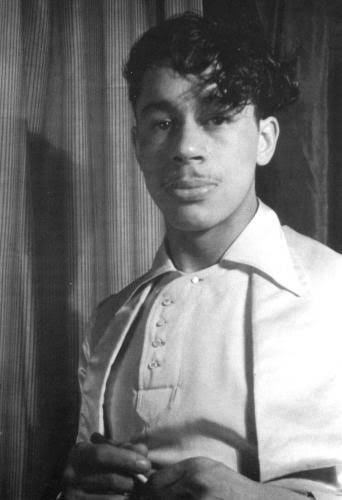
Born in Rochester, New York to two college educated parents, Cabell Calloway blew in Christmas day 1907, the wise men in Zoot suits and singing three-part harmony. The family moved to Baltimore when he was twelve and young Cab would blow off school to head out to Pimlico racetrack where he “cooled down” horses and developed a lifelong love for the ponies (the word “cool” involved from the jump). Caught shootin’ dice on the church steps, his teacher/church organist mother sent him to a Pennsylvania reform school, but when he got back home he returned to his hustlin’ ways, only this time he started taking vocal lessons, and was performing in nightclubs at the age of fifteen.
His senior year of high school he joined the basketball team and was soon hoopin’ pro with the Baltimore Athenians of the Negro Professional Basketball league (This was back when baseball was king, which means he saw the black future, not just musically, but athletically as well). His sister Blanche had become a successful band leader in Chicago so it was off to Chi-town where he met L. Armstrong (that minor figure) who taught him how to scat. By 1929 he was onto New York and with the hot breeze of the Harlem Renaissance at his back, he bent one ear toward Langston Hughes and one toward the street.
Urban and urbane Cab Calloway is the Dada Harlem truth. Preacher/hustler/hipster/hoofer/crooner he embodied five definitive archetypes of Harlem life. But that list doesn’t include the one that fifty years later would evolve into a cultural juggernaut and world dominating art form, and that of course is MC/rapper; which is basically a preacher and a hustler slugging it out in rhyme. But Cab didn’t just take the tales and tongue of the streets and turn them into content, he understood how to make them accessible to a wide (meaning white) audience, while still keeping it real as fuck (a magic trick he pulled off seventy years before Jay Z hijacked Hard Knock Life). He is the first to celebrate the abundance and creativity of black urban life, mythologizing musicians, dandies, addicts, hustlers, and down on their lucksters; portraying them not as stock types but as literary characters (literary characters whose stories have to be told in three minutes or sometimes one verse or line). He’s a black Damon Runyon, but he does it in poetry, not prose, his patter and slang to Runyon what the Nicolas Brothers are to Fred Astaire.
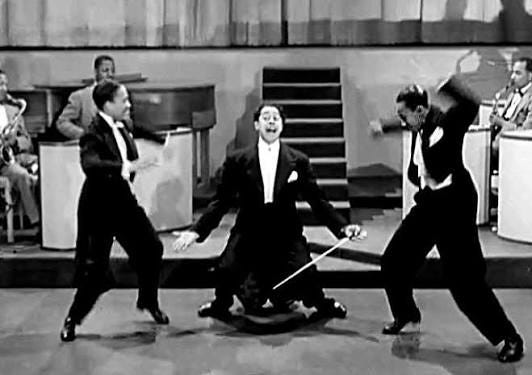
And like Jay Z, Kanye, Pharrell and the boys Cab has his eyes on the Benjamins, and at the tender age of twenty-three becomes the first African American with a syndicated radio show, making $50,000 a year and in the middle of the great depression. His song, Minnie the Moocher, was the first black single to sell a million copies. The cat struck gold with a tune about a woman whose dude (a coke addict named “Smokey”) takes her down to Chinatown and gets her hooked on heroin, or in slang parlance, “Shows her how to kick the gong around.” He tells sordid ghetto tales in a coded, rhythmic style and gets rich doing it. Is that not page one of the hip-hop play book? And he’s doing all this in 1931!
But Cab isn’t just a rapper/singer/song-writer/bandleader/dancer extraordinaire, he is also a satirist (the Johnathan Swift of the jive). Satire from the ruling class is hard enough to pull off, but satire from the underclasses is miracle work, and it takes a lot of confidence and chutzpah to pull it off. But confidence and specifically “chutzpah” is something Cab has by the boatload. Living in Harlem when it was still full of Jews, Calloway had big ears for Yiddish words and inflection. He’s got a song called “Abi Gezunt” (Abi Gezunt is a Yiddish expression that translates to “As long as you’re healthy”) that contains this Jew/jive jewel.
I’m Neil the spiel, a gas, a killer
A very close friend of Mrs. Miller
Miller, schmiller, Abi Gezunt
I’m a cat that’s in the know
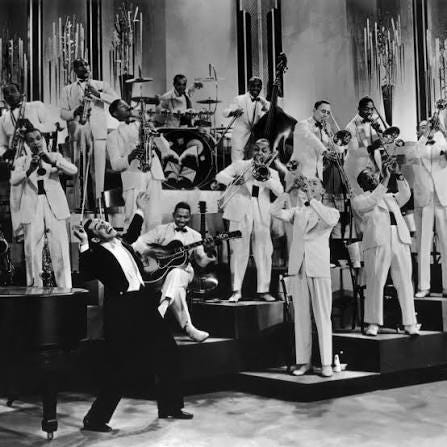
The dude hears and uses everything! Part sponge, part synthesizer, he puts urban culture in the jive grinder and makes it into jazz sausage. But of all the things he does it is the extravagant use of his band as back-up singers that gets me the craziest. “Call and response” is the conversation between preacher and congregation. Raised to an art form in the black church, Cab weaponizes it to the secular good. He takes “hallelujah!” and makes it “Hi de ho!” No one has ever had as hip a Greek chorus or used them as freely or to as great an effect. His boys/band will follow him anywhere, mimicking his funky absurdity with joy and conviction, the sanctuary and bandstand becoming one.
A few fun facts about Cab Calloway:
He turned down a chance to play with the Harlem Globetrotters, but years later performed during halftime at their games.
In 1938, he released Cab Calloway’s Cat-ologue: A Hepster’s Dictionary, the first dictionary published by an African American. It became the official jive language reference book of the New York Public Library.
In 1941, Calloway fired Dizzy Gillespie from his orchestra after an onstage fracas erupted when Calloway was hit with spitballs. He wrongly accused Gillespie, who stabbed Calloway in the leg with a small knife.
There is a stakes race run at Saratoga racetrack called the Calloway in his pony playing honor.
As I said earlier, he’s one the great originators and influencers of the 20th century, his impact felt everywhere and not just with folks like James Brown, Prince or Andre 3000. You know Doctor Seuss was listening to CC. That The Cat in the Hat and Minnie the Moocher are kissing cousins. Dig this section of the good Doctor’s Fox in Socks-
Ben’s band. Bim’s band.
Big bands. Pig bands.
Bim and Ben lead
Bands with brooms.
Ben’s band bangs
And Bim’s band booms
(And Basie’s swings
And Duke’s band zooms)
And how about Danny Kaye? Think he didn’t steal (or at least heavily borrow) his frantic, floppy-haired white boy bop from CC? He even did a version of Minnie the Moocher, and why not, you hear Cab or see him and you want to get in on it. Have a little of that gold rub off on you and make you shine.
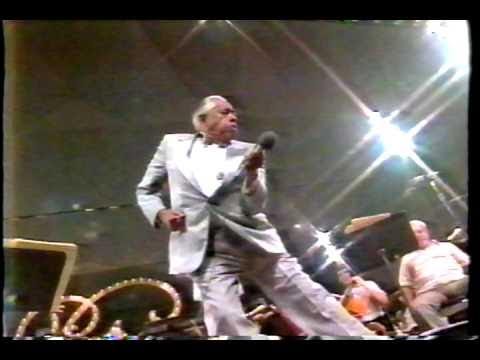
I think in the end what I love and respect about him most is the uniqueness and totality of his vision; how hard he swings and how many different elements are in play. How jazz and language are exalted simultaneously. But it’s his exuberance and humor that the world could not resist. He was a word spreader. The pied piper of jive. An alchemist, he transcended the racism and ignorance of 1930s America and created something joyous and undeniable, and he did in a way that was so original he came off as other-worldly as opposed to uncle Tomish. As he says in his song the Honeydripper-
And he jumps
And he sways
And he rips
And he rides
And he ships
And jumps
He’s high
Oh my
Boy, joy joy hoy boy hoy joy!
Tasty T- Between the Devil and the Deep Blue Sea
I love this a lot. If you wrote the screenplay of his life, and the film was made, I’d be happily sitting in the theater for it.